2024 Retrospective: Being Abbey Road

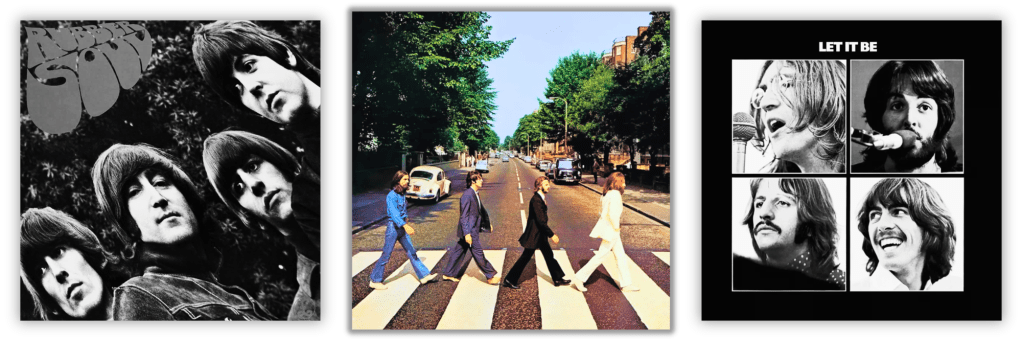
For a long time when I was younger, Rubber Soul was my favourite Beatles album. Recorded when they were in their mid-20s, it has an easy, natural optimism that I found very attractive. The Beatles were young, talented, good at what they did, and just starting to discover themselves as artists and people. There was a lot for them to be optimistic about, and it came across on record. It was an easy album to like.

In 2023, as an older man, weathered and scarred, I rediscovered Abbey Road and decided to change my mind. It was my favourite listen of that year, and I think my new favourite Beatles album, for much the same reasons that Rubber Soul is so great even though in many ways they are complete opposites of each other.

In contrast to Rubber Soul’s easy and natural optimism, the positivity in Abbey Road was a deliberate and hard fought choice. Leading up to its creation were the disastrous Let it Be sessions, and when they fell apart the vibes between the members were mostly very bad. But not all the way bad all the time. Only three weeks later the group decided to get back together again, to give it another go.

Paul McCartney said: “it was like we should put down the boxing gloves and try and just get it together and really make a very special album.” And producer George Martin said “Nobody knew for sure that it was going to be the last album – but everybody felt it was.”

The Beatles at this point were always on the verge of breaking up; they had grown into different people, and they had just been through too much. But they were clear-eyed on what the situation was, and going into Abbey Road they decided to choose joy anyways. Focusing in on what was important, the music that only they could make together, the resulting album was mature, complex, and radiated optimism. It was arguably the best of their career. Choosing positivity regardless of your challenges and just focusing on what’s really important seems to have yielded them excellent results in the face of adversity. Don’t get me wrong, Rubber Soul is still a great album, it’s just that natural optimism during the good times is less interesting than deliberate positivity during the tougher ones.

Rediscovering this album now was timely, because on many fronts 2024 was randomly not great.

The night before my daughter’s birthday, our basement flooded from the rain. Most of the floor and drywall had to be removed, we had to do waterproofing and install a sump pump. We had to find the sources of water and close them up. Some of that water came from a poorly positioned old shed, so we had to get that disposed of and get a new one. Huge cracks appeared in our driveway from the rain, so that had to get repaved. Then our dishwasher broke. And our washer and dryer were on their way out so why not replace those too. 

Now that we were warmed up, things could really start to go wrong. We had an active leak from our master bathroom dripping onto an old plaster ceiling, and because the moisture was behind the bathroom tile we had to demolish the master bath and build a new one. And because old plaster has asbestos, to remove it properly you have to seal off the impacted areas and move out of the house. And once you’re doing that you’re going to do a few other things too.

While my wife was in her last trimester of pregnancy, we packed up and moved to my parents house and ended up managing over 20 contractor jobs or major deliveries just to make the house work properly again.

Somewhere in between I sprained my ankle for absolutely no reason, got COVID, got into a minor car accident with less-than-minor damages, and I found that my credit score had accidentally been merged with somebody else with a slightly similar name, which I then had to get unwound. There is no reason why Ian Lee needs that many credit cards. Also, Trump.

With chunks of my house, car, health and possibly my credit rating were in some comical state of constant disrepair, none of it ever really got to me. It kept me busy, annoyed and somewhat poorer than when I started, but I was never actually upset. Because I knew that what was important in my life was the health and love of my family. My wife and daughter are both the sources and recipients of all the positivity and optimism and joy in my life. Everything else is just stuff.

My daughter is now 4, and was born very prematurely during the pandemic, and spent her first three months of life in the hospital. Tiny and red in her incubator, the beeping machines helped her undeveloped lungs breathe and monitored her heart, which we hoped would not require a surgery. That got to me, as it should. Because these are the real problems, the ones that rightfully keep you up at night, the ones that really threaten the things that matter. Today, she is an energetic, caring, sharp and articulate junior kindergartener, and amazes me on a daily basis. One positive side effect of the traumatic start to her life is the gratitude we feel for her simply just being. It will probably last us the rest of our lives. 

My wife continues to amaze me. When we first started dating we both had a feeling it’d be about that good forever, and 10 years in that seems to be coming to pass. We share the same values, want broadly the same things, and we make a strong and complementary team. She is hilarious in ways that are rare and original, and still surprises me to this day. I couldn’t have asked for a better partner in life, and I still stare at her face sometimes in admiration when I don’t think she’s looking, but she is probably looking because she sees everything somehow.

And to our new son, just born a few weeks ago. Of all the things that happened to us this year, your safe passage into the world was the one sole thing we were all hoping and praying for, especially given what happened with your big sister. Through the floods of the summer and the unplanned major renovations of the fall and winter, as long as you were growing bigger and stronger in your mother’s belly everything was going to be fine. Every other part of our lives could happily fall apart as long as you stayed whole, and I’d have gladly accepted all the house issues, car accidents and other misfortunes of day-to-day life if it meant that you were going to be okay.

He arrived a full term baby, exactly on time and as planned – a chonky 8lb 14oz, four times the birth weight of his sister. When I stare into my son’s eyes and he stares back into mine, it’s like looking through an infinity mirror into our shared past and future. I can see him through his eyes, but I also see my father reflected back at me, and his father before him who I never had the chance to meet, and then myself again, back and forth from the beginning to the end and back. It is 3am and he also needs a burp and a diaper change. I am tired and grateful.

Maybe one day I will introduce him to The Beatles or he may discover them himself, and assuming listening to albums or The Beatles will still be a thing in 2045, I’ll watch him to see which of their records he gravitates towards. Maybe it’ll be Rubber Soul like me, or maybe it’ll be Sgt Pepper like the rest of the world. Either way I’ll smile, knowing that Abbey Road is waiting for him whenever he’s ready to hear it.


Did you like what you read? Join my mailing list for other updates and to never miss a post:
Processing…
Success! You're on the list.

Rosé’s APT uses almost every chord in the scale

it’s probably in C minor and has every chord there except D minor, and other music theory facts that you probably don’t care about.

APT has a surprising amount of harmonic complexity for what is more or less a straight pop song. Which is fancy talk for saying it has unusual or interesting chord choices. This is going to get right into music theory land with no training wheels, and maybe some more specific production details, so If I haven’t lost you yet, I definitely will now! Here we go!

There are strong signals that this song is in Cm. The “uh huh uh huh” of the main cheerleader girl chant chorus are Bb to C, ie VII to I. The verse is the same, and the bridge is C, Bb, Eb, C (so I, VII, III, I), which also feels strongly locked to Cm, although that sequence itself is a little unique.

The pretty and melodic pre-chorus however is Ab, Bb, C, to Eb, and it’s still not clear to me if it’s in Cm or if it changes key to Eb. In Cm it’s consistent with the rest of the song but the relative chord combinations get awfully strange, because what the heck is VI, VII, I, III? Comparatively in Eb it presents as a much more normative IV, V, VI, I, but then why change keys just in the pre-chorus? 

Weird! 

But maybe ambiguity is the point. A good pop music strategy is to milk the tension before the catharsis, whether this is EDM drops or soft verses exploding into loud choruses or modern pop melodies that tease a resolution to the root that may or may not happen.

Given the key of the rest of the song, I think Cm makes the most sense. The idea of VI escalating stepwise upwards to I but then ending on III (which is kind of a flakier version of I anyways) and then cycling back to VI and going on forever kind of tracks – like the way most pop songs melodies today, forever sitting on II and never resolving to I or III, are in constant state of deliciously, tense limbo.

Moving to the bridge, we still have some interesting things to discuss.  The build-up guitar-style chug into the bridge is on G, which as the V of C makes complete sense, but is notable as the first we’re hearing the chord in the song. It resolves to the I, VII, III, I of the bridge, (C, Bb, Eb, C), which as noted is already an unusual combination, that then ends with a repeated hammering on F.  

F!  Where did F come from? 

Although as the IV of C it is harmonically quite unremarkable, but for it to show up now, for the first time, with the song being almost over, in such a forceful and climatically manner it kind of blew me away. 

The song has now featured every chord from I to VIII except for II. No supertonic for you. Take that, The Weeknd.

And just as this feels like a peak, it steps upwards even higher from IV to V to VI, running right through a pseudo-deceptive-cadence into the prechorus, which in itself is escalating stepwise upwards from VI to VIII. The song’s constant continuous escalation going into its climax is underpinned by these harmonic choices, chord structures, and application of music theory.

All in the service of good pop music. Pop music! Not classical, prog, experimental, indie or dance, but pure pop – the simplest, catchiest, and most digestible form of music, made with the explicit purpose to be understood and enjoyed by as many people as possible. For a pure pop song to have any complexity or nuance, whether in construction or music theory or cultural context, is to me that much more meaningful, as all the complexity must be refined to the point where it still appears simple on the surface. 

And that’s it. After spewing out over 3000 words into the ether I have finally run out of things to say about this 3-minute K-Pop trifle. But to the song’s credit, over the month-long rollout of these essays my initial blast of enthusiasm has waned only slightly.


If you’ve made it here to the end, thank you for sticking around. And if you like what you read, join my mailing list and never miss an update:

Processing…
Success! You're on the list.

Whose Song Is It Anyways (feat. Bruno Mars, Rosé & Lady Gaga)

Dammit Bruno, stop helping people, it’s confusing.

“ROSÉ & Bruno Mars – APT”

Though the international smash hit APT feels like it has been released as a Rosé solo track, if you look more closely it gets more complicated. 

On YouTube and streaming services, the song is labeled as “Rosé & Bruno Mars – APT.  Though Rosé is listed first, Bruno is positioned as an almost equal partner. It is not “Rosé – APT (feat. Bruno Mars)”, like in solo songs where another artist just kind of shows up for a verse. 

In the song’s artwork, ROSÉ is shown in big bold font, with Bruno Mars in a smaller font. Their names are separated by a stylized lightning bolt. If they wanted to put an ampersand, they would have put an ampersand. All this keeps their collaborative partnership even more vague.

It is definitely led by Rosé. But by how much?

Rosé has talked about how she came up with the “APT” hook, based on the Korean drinking game. That hook is definitely hers, and is distinctly Korean. But I suspect the rest of the song was heavily influenced by Bruno Mars. Something about the way he sings the pre-chorus feels like it was made for and by him, he has some history with a rock aesthetic, and some of the more atypical chord progressions do map to things he’s done in the past. Rosé has none of this stylistic breadth or complexity in her comparatively short history, nor in the songs she’s released since.

Obviously I have no proof of any of this and the full list of songwriting credits is quite long, so it’s hard to know who did what. But if, for the sake of the exercise, we just assume that I’m right, one could argue this is as much or more of a Bruno Mars song than it is a Rosé song. She doesn’t even sing lead on the pre-choruses once they start harmonizing.

So why does it still feel like it’s hers? 

Though the marketing of the song simply as being Rosé-first definitely helps, there is something else happening here in how the song itself is presented.

And that is, quite simply, that Rosé goes first. 

The first thing you hear is the chorus, which she sings. Then she does the verse and pre-chorus. She does them first.

The first time you experience each section of the song, it is her voice you are hearing, so subconsciously each section of the song is then anchored with her. 

By the time Bruno Mars appears, even though some of the connections with him may be deeper and firmer it’s really hard to shake the ideas of ownership we already have.  

Showing up first counts for a lot.

Imagine if it didn’t open with the chorus. What if Bruno’s verse and pre-chorus came first, even if Rosé kept the chorus and the bridge.  Would it still feel like her song? Or is she now a feature on a Bruno track, with a slightly Korean flavour?  

If only there was another comparable Bruno Mars collaboration that almost does this exact opposite thing. 

“Lady Gaga, Bruno Mars – Die with a Smile”

Just two months before APT dropped, “Die with a Smile” was released, a Bruno Mars collaboration with Lady Gaga. On YouTube and Streaming Services, the artist is labeled as either “Lady Gaga, Bruno Mars” or “Lady Gaga & Bruno Mars”. The music video is on Lady Gaga’s YouTube page, while Bruno hosts a live performance with 5% of the views. Clicking the Artist link on a music streaming services takes you to Lady Gaga’s page, not Bruno’s. 

The artwork on the single shows the two artists standing together, artfully, roughly right next to each other with equal positioning – except that Lady Gaga on the left has her arm and shoulder ever so slightly ahead of Bruno Mars. 

All of this positioning points again to a mostly equal partnership, with the artist that is not Bruno Mars being slightly in front.

When I actually listen to the song though, I completely forget that Lady Gaga is even in there at all. It’s always a surprise when she starts to sing, and when the song ends I’ve forgotten she exists again. To me, this is a loosie Bruno Mars single, steeped in his songwriting and melodic style even from the opening strumming pattern. When they say this was written collaboratively based on an initial idea from Mars, it feels to me like that initial idea was pretty well formed from the jump. Lady Gaga has almost zero presence.

Though this is all once again purely subjective (and depending on your Lady Gaga fandom a potentially unforgivable sin), I do have the one supporting fact in my favor: that Bruno Mars goes first. He basically gets the entire first minute and twenty-five seconds to himself.  The first time you hear each section of the song, it is with Bruno Mars’ voice. The verse, the pre-chorus, and the chorus, he took them and anchored them all. Not counting some subdued backing vocals, Lady Gaga doesn’t even really show up until 34% of the song is over.

What if their roles were reversed? What if Lady Gaga went first, and was the one introducing you to each section of the song? Would it have made a difference? It would have for me. Maybe for you too.  But we’ll never know.  Because you only have one chance to make a first impression and anchor an idea with an audience. There is only one chance to go first – and in this universe, Bruno took this song and Rose took the other, and our impressions from that point onwards are going to be what they are.

Going first matters.

So why don’t you join my mailing list so you can be the first to experience whatever comes next?  See what I did there? I am very good at this. See you soon.

Processing…
Success! You're on the list.

Rosé’s APT is smarter than you are.

K-Pop single impresses cynical 40-plus year old man

Rosé, from K-Pop supergroup BLACKPINK, has released a hit song in collaboration with Bruno Mars, and it is both excellent and fascinating on multiple levels.

It may even be smarter than you are, who knows, I needed a headline. Here we go.

The Basics

For starters, it gets a lot of the basics right. Every part of the song is a hook, from the titular chorus, (the “oh Ricky you’re so fine” cheerleader-girl-chant,) to the amazing melodic pre-chorus (“don’t you want me like I want you baby”,) to the bridge (“hold on, hold on, i’m on my waaay”,) to even the verses, each section is so catchy such that It almost doesn’t matter what order you put them in. 

Be a Great Vocalist

It also turns out that Rosé is a great vocalist. She has enough attitude to carry and own the chorus and her rap verses, but more importantly her singing is great: clear, strong and expressive. 

Her singing carries the bridge, and owning the bridge is critical as it’s in itself a huge build that relies heavily on having a strong vocalist. The Open-“A” sound she gets when she sings “way”, through whatever tube-amp-Vintage-Rock vocal processing they have setup for her, makes her sound good in a way that’s like Bethany Cosentino from Best Coast.  And that’s very good. This song wouldn’t have worked without that level of vocal talent.

Partner with a Complementary Great Vocalist

Getting Bruno Mars to somehow be on your track was already such a great pull both from a songwriting and performance standpoint, it’s almost unfair that on top of all that, he’s a great vocal match for Rosé: expressive and confident but in a different register. 

They are so dialed-in when they harmonize on the track (which they thankfully do a lot of), executing the same vocal performance and expressions but with complementary timbres. The chills I got listening to them only wore off after the first few dozen times replaying the song and bopping like a maniac. 

With a foundation this strong success is almost guaranteed, but then it goes and does a few more things on top that take it to the next level but are also more interesting to talk about.

Song Construction

Continuous Escalation

Good thrillers and action movies will ratchet up the tension and excitement at every moment, and this song does something similar. Though it follows your classic pop song construct, repeating choruses with pre-choruses, verses and a bridge, none of the repeated sections are ever exactly the same. Each new repeat adds a new element that elevates the song meaningfully, whether it’s switching vocalists on each verse or adding harmonies on the second pre-chorus. It just constantly builds and builds and builds. Especially the chorus.

Each of the four choruses (the “ah-pu-tu” chant of the title) gets progressively richer harmonic accompaniment – which is fancy talk for supporting chord structures. The first chorus of the intro is just the chant, a capella with the beat. The second one adds the chord progression of the verses, a basic I and VII in C minor. By the time we reach the third, we are now resting on the chord progression of the sung pre-chorus, a pretty and uplifting Ab, Bb, C, to Eb, with the fourth iteration adding full blown maximalist vocal harmonies for climactic effect. Hooks or riffs that start with minimal chord changes or tonality that then flip to really rich chord progressions is one of my favorite things.

Genre Flip in Act 3

For the first two-thirds of its runtime, APT is a Pop song. There is the catchy chant of a hook, meaty synth anchors, and a beat that sounds like it might be from a real kit, bouncy and full of handclaps. Like the comparable beat of Shake it Off, this is a Pop song with cheerleader and drum line energy.  For now.

It’s not until the bridge that the track fully flips into an Indie-Pop-Punk thing, adding a series of strong Rock & Roll signifiers: The kit drums start to rock out on open hi-hats, Rosé does her tube-amped Garage Rock yell, and the dirty synths start to function as distorted guitars – complete with a simulated guitar-chugging build at the beginning of the bridge, something I don’t think I’ve heard done before. 

Though naturalistic cheerleader-chants and live drums parse as Pop on their own, they also serve as a good foundation for pure Rock & Roll when these other pieces from the bridge are layered on top, shifting the song’s direction without feeling abrupt or a clash of conflicting styles.  It’s simple, but really really smart. 

This genre change is a key step in the continuous escalation of the song, kicking things up a notch going into the bridge – which is in itself a giant Rock build into a climactic refrain of the pre-chorus, a classic breakdown over start/stop live drums, peaking and ending with the final chorus, with the full and glorious backing harmonies on top. Good songcraft and continuous escalation.

What a rush. For me, anyways. Not sure how you feel about it, but if you want to see how there are three more essays worth of material on this seemingly benign k-Pop trifle then feel free to keep going to Part 2 right here or join my mailing list to keep updated.

Processing…
Success! You're on the list.