On Getting Published

I’m using the logo because I think the contract says I can.  And if I’m wrong, then maybe I can use the resulting cease-and-desist letter.

To my regular readers, all dozen of you that I actually know in real life, I have some fun news.

Yesterday, a piece of writing that started from this blog was published in the Globe and Mail. You can find the story here, and in news stands on Monday.

To everybody coming in from the article: Hello! Welcome to my little space. Please feel free to look around, sorry about the mess. About and Contact are at the top on the right, bathroom is down the hall to your left. Make yourself at Home.

To be published somewhere nationally is both thrilling and terrifying, though most likely nothing will happen; the piece will be read with a shrug, and readers will click or flip elsewhere. It will likely be lost forever in the sea of competing information, carried away by a wave of actually professionally written articles. The only readers of this post will be the original dozen, wondering what all the fuss is about.

My biggest fear is that the way the piece has been articulated gets read in an unintentionally negative or unproductive way: though the article is billed as a personal essay, it is super topical, talks about race, and is somewhat political. All dangerous and flammable objects, and I’m a shy and flammable kind of guy. I don’t think anything I’ve written is out of bounds, but I’ve read the piece so many times in the editing process with the Globe that I’m too tunnel visioned to really tell anymore. I guess we’ll find out.

Whatever happens, I take comfort in the fact that the story is real and honest, written to the best of my ability within the allowable standards of the publication:  I didn’t get all the commas and semicolons I wanted, and some of the more fun and rhythmic lines are just plain old sentences now.  It’s all probably for the best anyways: who needs that kind of pretension outside of Toronto.  I’ve put the unedited director cut below mainly to satisfy my own completionist tendencies, though feel free to give it a skim.

Writing the piece itself was a fun and rewarding challenge, and that to me is the most important part. It’s good to remind myself that this is why I started this blog to begin with: the joy and frustration of putting the right words in the right order, the satisfaction when the sentences come together just right, and the reminder of how I thought and felt about things at certain points in my life. Everything else is just gravy, though getting published is kind of cool.


On Wearing Masks
The Director’s Cut

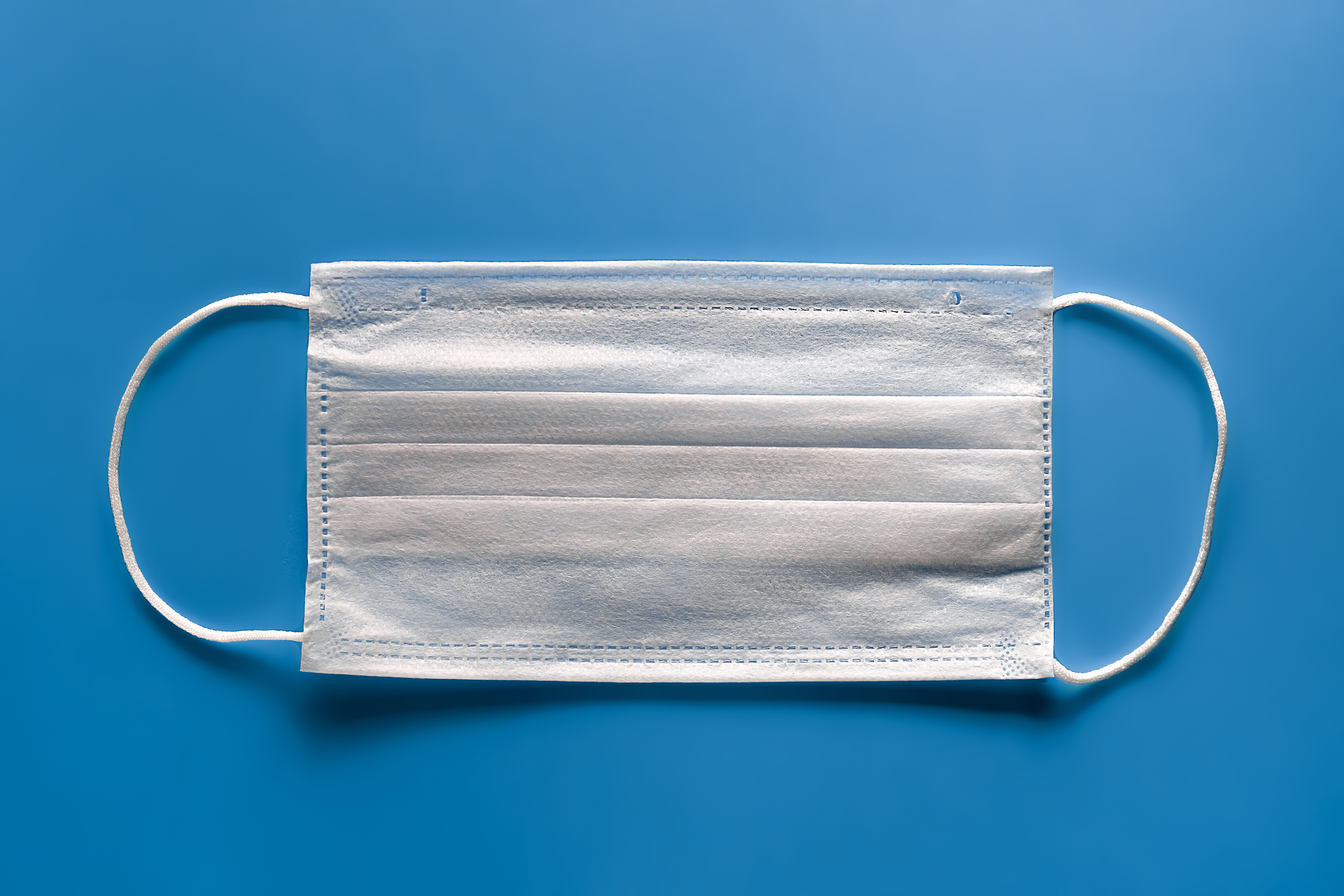
Even back before the coronavirus, wearing a mask in public was encouraged in East Asian culture.  As an Asian born and raised in Canada, it is telling that this practice felt very unnatural at first.

The same box of masks we use today was procured way back in January, well before all this started; my wife and I were lucky enough to get ahold of some and started wearing them daily on the subway.  She had emigrated from Wuhan years before it’s current notoriety, so wearing a mask to her was common sense and made her feel protected and safe.  I had recently emigrated from one part of Toronto to another, so wearing a mask in public was as foreign a concept as not apologizing for somebody else running into you.

Masks are uncomfortable: the added protection is powered by your lungs, so breathing is no longer a subconscious activity; unlocking phones is marginally harder because FaceID can’t see through non-woven fabric; and after fogging up your glasses, masks get caught in the arms when you try to take them off, like a clingy symbiote.   And If you were a mask-wearing Asian back in January, there’s also the uncomfortable way people looked at you.

Stares and glances from non-mask wearers came with a mix of fear, disgust and resentment; a bitter and potent exclusionary cocktail.  Remember that this was back in January; before we stopped physically going to work, before the virus had spread outside China, and before North Americans began reconsidering the effectiveness of mask-wearing for the public.  It’s understandable how seeing me as an Asian wearing a mask could prompt a series of emotional responses; fear that I could be infected, disgust that I even had a mask given the official guidance at the time, and resentment for appearing to be part of a culture that was seen to be the source of the problem.  When I got that glare, I glared back with indignation.  I wonder what I was saying to them.

I remember, too, that mask-wearers also stared, and back then they were almost exclusively Asian.  Behind their brown eyes was an understanding, an urgency, and solidarity.  But also fear.  It was still a potent emotional cocktail, but at least it was an inclusive one and went down a little bit smoother.  They saw in me a fellow countryman, who knew and understood the seriousness of the situation while living in a country that didn’t.  But also that I might be infected, so it would be better off to stand a few feet away.

The deep irony is that this is the exact opposite experience of what it was like growing up as an Asian-Canadian.  The “real” Asians, the ones rooted in the cultures where mask-wearing was second nature, were finally accepting me as one of their own.  Meanwhile I felt rejected by the culture that I often felt more connected to, from the country that prided itself on welcoming immigration.  I have always been a visible minority; it took wearing a mask to finally make me feel like one.

On April 3, the CDC changed their guidelines on face masks.  Face coverings are to be worn in public settings, and while surgical masks are still not recommended for civilians it is admittedly due to supply constraints rather than their effectiveness.  On this topic, North American health care finally aligned with all the Asian countries that had previously experienced a similar pandemic, their citizens grinning smugly behind covered mouths.  As an Asian who grew up in North America, the resolution of this one point of cultural dissonance will serve as a substitute for the many others that may never come.  

I once envisioned a day when it would be just safe enough to ride the subway again in larger numbers.  Together, we would all wear masks in the same confined space; people of all cultures no longer divided by belief or by background, but united instead by the same fear of germs that our neighbours might be carrying.  Today I know it will take a lot more than a CDC guideline to realize this modest vision of unity.  

Masks have been politicized, for better or for worse. Mask-wearing protestors around the world have cemented the association between masks and protests, whether they are in Hong Kong fighting to keep freedom of speech in the wake of authoritarian policy changes, or in America fighting for racial equality in the wake of George Floyd’s murder.

In America, the world leader in coronavirus infection, some still refuse to wear masks. This may be rooted in a selfish read of American values, where freedom, independence and self-expression now come at the expense of the community’s safety. These same people might look down at mask wearers, Asian or otherwise, and see weakness, a sheepish compliance or a reluctance to stand out on their own. In truth, wearing a mask is a sign of solidarity; its strength comes from numbers, from the collective action, from the many willing to take a small sacrifice and inconvenience for the well-being of strangers in an unsung and unheroic fashion.

Wearing a mask is not just a proven tactic to fight the spread of disease, it’s also a symbol: it shows the world that you care, both about yourself and those around you. I wear masks now in the hopes that one day we won’t have to.

Coronavirus: The Great Unequalizer

The “V”-shape is for Vendetta

I was originally going to call this post “Why Stocks are Fine” before I realized I neither had the answer nor did I know if it was actually true.

When I cashed out my stock portfolio that fateful Monday in mid-March, a few things were clear: the virus was among us in North America, it was going to be very bad for people and businesses, and emergency measures would be required.  Trump’s history of incompetence and inability to execute was concerning, and we were already behind.  It seemed that day many other people were thinking the same thing, and we hammered the “Sell” button like we were playing Diablo.  The Exit sign was bright, and the doorway was wide enough to accommodate all of us, for a fee.  Stocks crashed.

In the following weeks, American congress passed a historic $2 trillion worth of stimulus, and the stock market wobbled upwards and hasn’t yet looked back.  5-6 million Americans lost their jobs every week, enough to repopulate Toronto twice over.  Stocks rallied.  Thousands of Americans died every day, while I quietly worked from home.  Stocks rallied.

I had forgotten that the stock market is not a reflection of the general economy, or the well-being of the people.  It is the stock market.  Averages are not equally weighted; your pain only matters as much as you do.  I bought back in a few weeks later and have been recouping my losses ever since.

The coronavirus is an accelerant of inequality, the thick and growing wall that separates the ‘haves’ from the ‘have-nots’.  That the virus does it’s work along the same border is the deep, cruel irony of this entire situation.  The less your livelihood depends on physically having to be somewhere, the more likely you are a knowledge worker that can keep working in near complete safety, in addition to already being relatively well-off financially.  Everybody else in industries that rely on physicality are facing health risks if they are lucky enough to still be working, or unemployment if they are not.  

There are few worse things than a non-expert opinion, so here’s mine: the aggregate economic impact of the millions of lost jobs in relatively lower paying industries doesn’t compare to all the better-paid knowledge workers that are still doing fine, let alone the rich who still have all their wealth: socially isolated, watching Netflix in concrete bunkers, next to stacks of N-95 masks and empty take out boxes.  

As an assessment of economic impact, this is mostly wrong and ignores the many things that I am not capable of discussing.  Oil is now basically free, and I don’t understand what that might mean to the world supply chain; I just know there is now a storage problem and my shed can barely fit my lawnmower so even here I’m of no use.  This is just to say the headlines on the record unemployment don’t tell the full story until you know what those jobs were and what their economic contribution was.  The ‘Have-Nots’ are now hurting from disease in addition to not-having.  The ‘Haves’ are still fine, with equity and employment; anxious but healthy, and working from home. 

The coronavirus is also an accelerant of digital adoption.  The world’s largest tech companies double as America’s largest companies, and own the handful of top slots on the S&P 500.  They are already extremely advantaged, with largely unregulated ownership of the world’s data, as well as the scale to make use of it effectively.  That tech companies see a smaller impact relative to non-tech companies is already a distinct advantage; they are large and successful, insulated with towering piles of cash, and they have a workforce of knowledge workers that can easily self isolate and still be productive.  The fact that they also see a potentially permanent increase in the use of their digital products with everybody at home is really just unfair.  You have not only the naturally fastest runner, but one that also got a really good night’s sleep while everybody else just tripped on their shoelaces.  

Big tech will emerge fine, or better.  Others will not be so lucky.  The at-risk companies also serve or employ the same at-risk people, the people that faced a choice between employment or physical well being and had the choice made for them.  The companies may get financial assistance, hopefully doled out equitably to those that need it.  The individuals may get a busy signal or a 404 error.

The coronavirus seems to enjoy benefiting those that are already ahead.  Inequality creates divergent worlds, and the virus has exacerbated the difference between them.  It is an added disadvantage to the already disadvantaged, letting the winners win by an even greater margin.  It is maddening that the virus happens to follow the same rules established by income inequality, but it is also difficult to think of a scenario that would disproportionately impact only the rich. 

The Containment Show

Not quite cabin fever, maybe just the dry cough

From my bay windows, I can see just as far as the ends of my street.  If the whole world stopped existing just past this view I would be none the wiser.  Beyond the stop sign flows the hot lava.

It has been 5 weeks of self isolation and working from home; excluding the odd supply run, I basically have not left the house.  I get fresh air when I remember to open the window; it’s sweeter than I remember. My face presses comically against the screen.

The Truman Show is a 1998 movie about a man who grows up in an enclosed and constructed reality as the unwitting star of a reality TV show, and it was filmed with a budget of $60 million dollars. If they were to make a real show like this in current-day pandemic times it could probably be done for a fraction of the cost of the actual movie. Maybe they already have.

Perhaps a strong sedative was slipped in our food one night, and my wife and I were transported to a replica of our house on a modest Hollywood soundstage. Instead of the internet, we would be unwittingly connected to a team of actors, media experts, and AI, who would replace the content of our digital information and social interactions with scripted content from the team of writers (and the other AI). On next week’s episode, Google and group chats will tell me the pandemic has escalated. It’s zombies now. All connections to the outside world are through computers of varying size; if they tell me there are zombies just beyond the view of my bay window I have no reason to doubt them. I order a slightly stronger lock from Amazon and I stop taking out the garbage. 28 Days Later is queued up after Contagion.

It is exceedingly unlikely that this scenario is true, but it’s still within the realm of the possible; a fraction of $60 million dollars is still a good amount of money that somebody could have a lot of fun with. Not going outside in over a month means all information about the world outside the walls of my house is received digitally. This is obvious, but also strange to be actually living through. It’s the feeling of being confined, but only physically; the mind is still free to explore all the virtual spaces it had before.

In truth, this is really not too different from the world before coronavirus: We’re all still socializing the same information from the same sources with the same groups of people.  Coworkers and friends with similar backgrounds and mindsets, drawing from the same pool of cultural ideas and echoing its variations to each other. We may be trapped now in containment, but how free were we to begin with?  

There is a memory I have as a child, of a specific ride in Centreville on Centre Island. You drive a tiny car around a small track, with a single rail that runs down the middle of the track and under your vehicle. You have full control over the accelerator and steering (which for a child is pretty cool), except a set of bumpers under your car prevent you from deviating too far from the track. That day in my tiny car I learned about the mechanics of driving, and the illusion of freedom. This memory resurfaced many years later, driving a slightly less tiny Honda Civic to and from a job I was ambivalent about and a stifling home life. I was stuck on a track going around in circles.

We all live our lives in boxes of varying size and opacity, that grow and shrink as we move through life.  Over time my box got bigger than the few blocks between home and work. When we got the mortgage for this house I glimpsed one end of my new box, in the distance in the fog, in what was once an endless green field.  This is not a bad thing. We all have to do work, life is finite, and boundaries help us focus and force us to make choices.  

Today the box of our lives is arguably the smallest it’s ever been. Circumstances have forced us to discard many of the things we love to fit into this smaller box, but also forced us to choose what to keep in it with us: relationships, internet, Netflix. When things get better and our boxes get a little bigger, I hope we will be thoughtful about what we choose to fill the newfound space with.

On Wearing Masks

It’s complicated.

Even back when things were normal, wearing a mask in public was encouraged in East Asian culture.  As an Asian born and raised in Canada, it is telling that this practice to me feels very unnatural.

Way back in January, my wife and I were lucky (and inconsiderate) enough to get ahold of some masks, and started wearing them on our daily commute on the subway.  My wife had emigrated from Wuhan years before it’s current notoriety, so wearing a mask to her was common sense and made her feel protected and safe. I had recently emigrated from one part of Toronto to another, so wearing a mask in public was as foreign a concept as not apologizing for somebody else running into you.

Masks are uncomfortable.  The added protection is powered by your lungs, so breathing is no longer a frictionless activity.  Unlocking phones is marginally harder because FaceID can’t see through non-woven fabric. After fogging up my glasses, masks get caught in the arms when I try to take them off, like a clingy symbiote.  And then there’s the way people look at you.  

Physical discomforts are nagging but tangible; social and emotional discomforts are a little more subversive.  Looks from strangers range in duration from a glance to a stare, and come in two varieties that are awkward in equal and opposite directions.

The first is from the non-mask wearer, a mix consisting of fear, disgust and resentment; a bitter and potent exclusionary cocktail.  Remember that this was back in January; before we stopped physically going to work, before the virus had spread outside China, and before North Americans began reconsidering the effectiveness of mask-wearing for the general public.  It’s understandable how seeing me as an Asian wearing a mask could prompt a series of emotional responses; fear that I could be infected, disgust that I even had a mask, let alone the disregard for the official guidance, and resentment for appearing to be part of a culture that was perceived to be the source of the problem.  When I got that glare, I glared back with indignation. I wonder what I was saying to them.

The second kind is from the mask wearer, and all mask wearers at the time were exclusively Asian.  Behind their brown and oft-bespectacled eyes was an understanding, an urgency, and solidarity. But also fear.  Still a potent cocktail, but at least it was inclusive and it went down a little bit smoother than the other one.  They saw in me a fellow countryman, who But also that I might be infected, so it would be better off to stand a few feet away.

The deep irony is that this is the exact opposite experience of what it was like growing up in Canada; an inverted microcosm of the Asian American experience.  The “real” Asians, the ones rooted in the cultures where mask-wearing was second nature, were accepting me as one of their own. Meanwhile I felt rejection by the culture that I actually felt more connected to, from the country that prided itself on welcoming immigration.  I have always been a visible minority – it took wearing a mask to finally make me feel like one.

On April 3, the CDC changed their guidelines on face masks.  Cloth face coverings should now be worn in public settings, and while surgical masks are still not recommended for civilians it is admittedly due to supply constraints rather than their effectiveness.  On this topic, North American health care is finally aligned with all the Asian countries that had previously experienced a similar pandemic; their citizens grinning smugly behind covered mouths. As an Asian who grew up in North America, the resolution of this one point of cultural dissonance will serve as a substitute for the many others that may never come.

I look forward to the day when this is almost over, when we feel just safe enough to ride the subway again in larger numbers.  Together, we will all wear masks in the same confined space; people of all cultures no longer divided by belief or by background, but united instead by the same fear of the germs that our neighbours might be carrying.

Enter Coronavirus (03/21/2020)

In retrospect this was a really good time to start blogging again

In January, we were planning to have my in-laws visit us. They are both from Wuhan. This did not happen.

My wife was seeing the effects of the virus on Chinese social media, and was getting worried about the virus making its way here and whether our Western governments would be able to handle it. When things got bad in China, Xi Jinping clapped his hands, sent a few messages on WeChat, and ten days later a new hospital appeared in Wuhan. If Canada were in the same situation its response would be comparatively drowsy. I told her not to worry. The virus wouldn’t make it’s way here, and even if it did I was sure it wouldn’t be that bad. She told me I had no idea. I bought the overpriced Purell on Amazon to make her feel better, not because I thought we needed it.

Today is Saturday March 21.  Flipping her hair back with freshly sanitized hands, her eyes shine sassily behind a yellow surgical mask.  She’s always right, and she knows it.

I believe in every social pool there is a finite amount of anxiety, and as the gravity of a situation is understood by more people the anxiety spreads across evenly and everybody shares the collective mental burden.  One week ago, it didn’t feel like the Western world really understood or was taking the appropriate actions, so the anxiety was mine and mine alone. By mid week, the stock market had crashed, our workplace was managing an overloaded VPN from the newly instituted work-from-home policy, and various emergency relief packages and travel bans were announced.  Many pennies had dropped this week, as well as public sentiment, my net worth, and ironically many of my worries. Everybody out there was freaking out just enough and roughly in the right direction for me to start to feel a little bit better. The situation is still extremely bad, North America is still not ready, but at least now most people know about this curve that needs flattening.  Next week presumably is when we really start to find out how unprepared we really are.

In 2008, 2 days after Lehman Brothers imploded I liquidated my stock portfolio at what seemed at the time like a large loss. This past Monday, Mar 16, which would soon be known as the worst one day drop since “Black Monday” in 1987, I did the same thing. Eating a loss now is easier if you expect things to get much worse later, albeit this time around it’s centred on life and death instead of a stack of bad mortgages. Waking up in the morning and checking the Stocks app hoping the markets have crashed is somewhat analogous to waking up in the morning and checking the News app hoping that more people have died. It’s like I’m actually betting against humanity, hoping for the best yet putting real money against the worst. This is an awkward and meta-guilt-ridden place to have put myself in. Our small box of yellow surgical masks is asking to be donated to the nearest hospital, but I close the cupboard door to block out it’s soft, pleading voice. It’s also getting harder to fall asleep at night, but I might just be sore from sitting too long in the same chair.

Transitioning to social distancing was such a non-event it really made me really wonder about my old lifestyle choices. The only difference between weekdays and weekends is which laptop I turn on in the morning. I eat lunch at the same handful of restaurants as I did before, except now a third party brings the food to me and I throw the delivery bag out very quickly. Dishes still need to be done, and podcasts still need to be listened to. I think not having children is a huge reason why this is so easy for us right now; I can only imagine the parents who are both working from home and taking care of their kids at the same time, and how they must be managing. The poop must be everywhere, on the walls and filling your shoes.

Getting together with friends had already gotten increasingly difficult. As everybody got married and started having kids the group size grew very large very quickly, making gatherings harder to organize. This virus was just another exponential growth curve that forced us to stay home. Even though I don’t see people anymore, I’m actually more engaged more regularly with my social circle than ever before; as the virus started lighting up in Toronto, so did all my WhatsApp group chats (and that one straggling Google Hangout). Friends were sharing news and gossip, expressing concern and actively checking in on one another. One guy in Richmond Hill said he was running out of garlic, and friends from across the GTA immediately offered assistance, despite the inefficiencies of delivering a clove of garlic from Whitby to Richmond Hill. The thought counted for something and the sentiment was real.

I had my first group video chat with some friends recently, on a night where meeting up would have been unlikely even in normal circumstances.  We talked and laughed at each other’s increasingly unkempt hair. My friend was holding his new baby, and as I saw him for the first time peeking out from their corner of my monitor it occurred to me that if it wasn’t for the coronavirus I would likely not have seen them until much later on.  

We are going to see how social behaviors change in a world that is simultaneously self-quarantined and digitally-enabled; social technologies are going to get used in joyful and unexpected ways: meeting for after-work drinks on enterprise video conferencing software instead of at the bar, and Yoga classes being taught on Zoom.

The new behaviours we develop in response to forced isolation may stick with us after this is all over, and maybe even supplement going out to meet up with people when that becomes too burdensome. There is a space for this in our culture and we have the tools; maybe this is the time where we also develop the habits. It’s also entirely possible that nothing changes once this is over, and we abandon both the grievances and learnings of the quarantine lifestyle. Until we find out I will hold onto hope, alongside other essentials like friends and family and a strong internet connection.