2024 Retrospective: Being Abbey Road

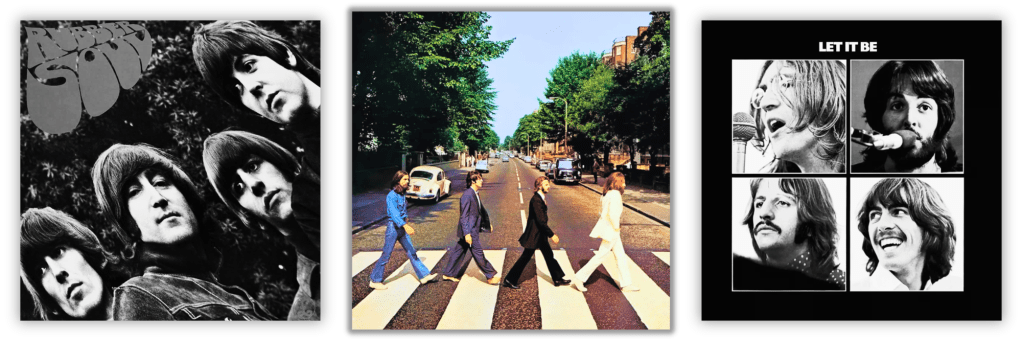
For a long time when I was younger, Rubber Soul was my favourite Beatles album. Recorded when they were in their mid-20s, it has an easy, natural optimism that I found very attractive. The Beatles were young, talented, good at what they did, and just starting to discover themselves as artists and people. There was a lot for them to be optimistic about, and it came across on record. It was an easy album to like.

In 2023, as an older man, weathered and scarred, I rediscovered Abbey Road and decided to change my mind. It was my favourite listen of that year, and I think my new favourite Beatles album, for much the same reasons that Rubber Soul is so great even though in many ways they are complete opposites of each other.

In contrast to Rubber Soul’s easy and natural optimism, the positivity in Abbey Road was a deliberate and hard fought choice. Leading up to its creation were the disastrous Let it Be sessions, and when they fell apart the vibes between the members were mostly very bad. But not all the way bad all the time. Only three weeks later the group decided to get back together again, to give it another go.

Paul McCartney said: “it was like we should put down the boxing gloves and try and just get it together and really make a very special album.” And producer George Martin said “Nobody knew for sure that it was going to be the last album – but everybody felt it was.”

The Beatles at this point were always on the verge of breaking up; they had grown into different people, and they had just been through too much. But they were clear-eyed on what the situation was, and going into Abbey Road they decided to choose joy anyways. Focusing in on what was important, the music that only they could make together, the resulting album was mature, complex, and radiated optimism. It was arguably the best of their career. Choosing positivity regardless of your challenges and just focusing on what’s really important seems to have yielded them excellent results in the face of adversity. Don’t get me wrong, Rubber Soul is still a great album, it’s just that natural optimism during the good times is less interesting than deliberate positivity during the tougher ones.

Rediscovering this album now was timely, because on many fronts 2024 was randomly not great.

The night before my daughter’s birthday, our basement flooded from the rain. Most of the floor and drywall had to be removed, we had to do waterproofing and install a sump pump. We had to find the sources of water and close them up. Some of that water came from a poorly positioned old shed, so we had to get that disposed of and get a new one. Huge cracks appeared in our driveway from the rain, so that had to get repaved. Then our dishwasher broke. And our washer and dryer were on their way out so why not replace those too. 

Now that we were warmed up, things could really start to go wrong. We had an active leak from our master bathroom dripping onto an old plaster ceiling, and because the moisture was behind the bathroom tile we had to demolish the master bath and build a new one. And because old plaster has asbestos, to remove it properly you have to seal off the impacted areas and move out of the house. And once you’re doing that you’re going to do a few other things too.

While my wife was in her last trimester of pregnancy, we packed up and moved to my parents house and ended up managing over 20 contractor jobs or major deliveries just to make the house work properly again.

Somewhere in between I sprained my ankle for absolutely no reason, got COVID, got into a minor car accident with less-than-minor damages, and I found that my credit score had accidentally been merged with somebody else with a slightly similar name, which I then had to get unwound. There is no reason why Ian Lee needs that many credit cards. Also, Trump.

With chunks of my house, car, health and possibly my credit rating were in some comical state of constant disrepair, none of it ever really got to me. It kept me busy, annoyed and somewhat poorer than when I started, but I was never actually upset. Because I knew that what was important in my life was the health and love of my family. My wife and daughter are both the sources and recipients of all the positivity and optimism and joy in my life. Everything else is just stuff.

My daughter is now 4, and was born very prematurely during the pandemic, and spent her first three months of life in the hospital. Tiny and red in her incubator, the beeping machines helped her undeveloped lungs breathe and monitored her heart, which we hoped would not require a surgery. That got to me, as it should. Because these are the real problems, the ones that rightfully keep you up at night, the ones that really threaten the things that matter. Today, she is an energetic, caring, sharp and articulate junior kindergartener, and amazes me on a daily basis. One positive side effect of the traumatic start to her life is the gratitude we feel for her simply just being. It will probably last us the rest of our lives. 

My wife continues to amaze me. When we first started dating we both had a feeling it’d be about that good forever, and 10 years in that seems to be coming to pass. We share the same values, want broadly the same things, and we make a strong and complementary team. She is hilarious in ways that are rare and original, and still surprises me to this day. I couldn’t have asked for a better partner in life, and I still stare at her face sometimes in admiration when I don’t think she’s looking, but she is probably looking because she sees everything somehow.

And to our new son, just born a few weeks ago. Of all the things that happened to us this year, your safe passage into the world was the one sole thing we were all hoping and praying for, especially given what happened with your big sister. Through the floods of the summer and the unplanned major renovations of the fall and winter, as long as you were growing bigger and stronger in your mother’s belly everything was going to be fine. Every other part of our lives could happily fall apart as long as you stayed whole, and I’d have gladly accepted all the house issues, car accidents and other misfortunes of day-to-day life if it meant that you were going to be okay.

He arrived a full term baby, exactly on time and as planned – a chonky 8lb 14oz, four times the birth weight of his sister. When I stare into my son’s eyes and he stares back into mine, it’s like looking through an infinity mirror into our shared past and future. I can see him through his eyes, but I also see my father reflected back at me, and his father before him who I never had the chance to meet, and then myself again, back and forth from the beginning to the end and back. It is 3am and he also needs a burp and a diaper change. I am tired and grateful.

Maybe one day I will introduce him to The Beatles or he may discover them himself, and assuming listening to albums or The Beatles will still be a thing in 2045, I’ll watch him to see which of their records he gravitates towards. Maybe it’ll be Rubber Soul like me, or maybe it’ll be Sgt Pepper like the rest of the world. Either way I’ll smile, knowing that Abbey Road is waiting for him whenever he’s ready to hear it.


Did you like what you read? Join my mailing list for other updates and to never miss a post:

Processing…
Success! You're on the list.

Hong Kong’s Outsiders: The Western Born

Dense with meaning, and smog.

As a child of Hong Kong immigrants born and raised in North America, I watch the motherland decline from a distance with extremely complicated feelings.

I worry about my extended family.  My remaining grandparents and most of my uncles and aunts are firmly rooted there, established and proud, tucked away in the sea of tall condo buildings high above the city streets; once host to protests and occasional violence, an autocratic government and an indifferent pandemic have since quieted the unrest considerably. My little cousins are sprinkled across the globe in various stages of education. By the time they mature enough to understand what’s been happening to Hong Kong’s democracy and culture, there may not be much of it left.

Though my empathy goes out to those with roots in the motherland, my own perspective and feelings are further removed. I was born in Canada, raised and immersed in Western culture; I know intellectually that Hong Kong should be my home of homes, but in practice it’s a place that we occasionally visit because a lot of our relatives live there. And even then, as a child, something about the place never quite sat right with me.

There is a lot for me to like about Hong Kong, theoretically.  I love big cities and their bustling urban messiness, full of life and chaos and restaurants. Urban density can sometimes be fun to have a soak in: A rush hour crowd engulfed me once on the streets of Causeway Bay, and I waded through the swarm of other Chinese bodies like swimming upstream through a school of black-haired fish. Getting around is easy.  Hong Kong taxis are cheap and plentiful, the streets full of the iconic red-and-white Toyotas, ready to open their mechanized back door for you and lower their circular “For Hire” sign, the blasting AC a welcome respite from the heat as you recline on their too-soft cushioned back seat.  The subway system is comprehensive and intuitive: once I was old enough, I would venture out alone with nothing more than my Octopus card and the ability to read maps, tapping on and off as I pleased, almost as if I lived there.  The train would always offer advice in her soothing British-Chinese voice, a perfectly appropriate accent until only very recently.  The doors opened on the left, I minded the gap, and emerged from the darkness into yet another part of the city’s endless sprawl.  But no matter which part of the city I would pop out into, it would always feel like a reconfiguration of the same fundamental place: the giant shopping mall.

In Hong Kong, commerce is inescapable.  Walking the streets and buildings is like wandering an eternal labyrinth of retail, endlessly unfolding, where any path or walkway will inevitably open up into a new promenade of shops.  Every square foot of space in the city is fully utilized to sell you a good or a service.  I once saw a single, empty, retail space tucked away in a farm of identical units, noteworthy for its jarring amount of uncapitalized real estate. Wandering this environment can be fun, even thrilling, for up to a few days, especially if you have clothes to buy or if you’re feeling peckish. But once you’ve been sufficiently styled and fed, the mood, pace and density can start to feel overwhelming.

Everything about Hong Kong is relentless. The inescapable retail. The family dinners, endless and generous, with uncles and aunts that you simultaneously have not seen for years and just saw at lunchtime. The constant humidity renders showering ineffective: your clothes are always sticky, and the air pollution is at a constant low-grade haze that makes everything look just a little less clear and every breath feel just a little less deep. I remember how sweet the air tasted outside the airport upon returning home, standing next to a cigarette smoker and the exhaust from a running car.

This may all be to say that the city bumped up against my North American fragility, entitled and weather-sensitive. I wandered the streets, still searching for some deeper truth beyond the humidity and air quality; locals shot past me moving with purpose as I sleepwalked through another hazy afternoon, when a realization hit while riding on the subway.

At any given moment on public transit, your fellow passengers represent a random sampling of all the people in your city: a cross section of its entire demography. You share seats with the elderly and jostle with university students, maybe put an unintentional elbow into an office worker. Everybody takes the subway eventually, and if you ride it enough the commuters will give you a feel for the city’s temperament. So what might you find on a Hong Kong subway? Office workers swaying like leaves while holding the handle, drained from the six-day week in the world’s most overworked city. Students dreading high school exit exams and children dreading kindergarten admission interviews, their worried parents hovering nearby. In Hong Kong, its subways are telling me that its people are stressed, anxious, and tired.

When I return to Canada I end up paying closer attention to my commute just to make sure I’m not biased or insane, and sure enough, in Toronto, there are random spots of lightness on even the dreariest of subway rides. On the groggy morning train the odd teenager will smile quietly at a text from a friend. In the evening crowd of tired professionals, a few construction workers radiate satisfaction after an honest day’s work. When I used to take the GO train in the morning there was one woman who was hard-wired to make friends and chat with her neighbours, no matter how ungodly the hour. It was a little annoying and I don’t understand it, but her positivity was undeniable.

Hong Kong locals may dismiss these findings with a wave of a hand.  High stress and anxiety are an accepted part of life, the cost of doing business, the price of extreme modern convenience.  It turns out that wearing busy-ness and stress as a badge of honour and a symbol of importance has always been a part of advanced capitalism: Hong Kong just got there a few decades before the Millennial burnout in the West. Of course Canadians will appear slow in comparison, yokels in an urban backwater; thick as syrup and sluggish from the poutine, all sense of urgency snuffed out by our inefficient and socialist democracy. It’s the land where it’s impossible to get rich.

My extended family have been telling me this story my entire life, and though these views are not entirely wrong they’re still hard ones to hear from those that matter to you.  My childlike and barely conversational Cantonese made me seem as slow as everybody thought I was, fulfilling all of their low expectations. All my best thoughts and retorts stayed trapped inside a passive Canadian-born body, eyes glazed and slack-jawed.  And yet they would constantly ask me to move back, which I’ve always thought was weird.  Though it would have been wise to have gone in my twenties, to broaden my horizon, work hard, eat well and travel, to have done so would have been to admit that they were right about me, that I was indeed a slow country bumpkin born and raised in the ramshackle backwaters of Toronto, and that they as Hong Kongers were indeed just better people, reaching down to me from above in an act of charity. I was too proud to accept their help should it validate their condescension.

The city itself, in its own chaotic and lively way was also trying to tell me that I didn’t belong within it; that in the one place you would expect me to blend in, I still don’t.  All the years of English-speaking has sculpted my mouth muscles and expressions such that my Westernization is etched directly onto my face, my own cultural treachery made apparent to all the surrounding locals.  It only takes one look from a merchant before their disappointment becomes palpable, and I get the broken English reserved for foreigners. I haven’t even said a word yet. But when I do, there are no deals.

Maybe I’ve been thinking about this the wrong way.  Maybe it’s not about how I’m reacting to Hong Kong, but how Hong Kong is reacting to me, and to what I represent.  All the disappointment in the air might be centered around my Westernized flavour of existence: the way I walk around with my big laugh and sense of independence, speaking broken and incompetent Cantonese and missing all the subtext in conversations that I’m expected to understand. I am a living affront to Chinese culture, the death of its future walking amongst them. And the culture’s reaction to this perceived insult? A mild sort of inverted racism, where we are judged not by our relatively similar outward appearance, but on the assumptions of what’s left on the inside: on the vacuum left by the culture’s absence.

Westernized Asians are called bamboo poles, or “Jook-Sing” in Cantonese. Though the comparison seems innocuous or even flattering at first, given bamboo’s propensity to be tall, sturdy, and generally useful, rest assured that it is neither. Though bamboo rods seem like hollow tubes on the surface, there are actually walls on the inside, evenly spaced, creating a series of cavities that are sectioned off from each other, such that water poured in one side is blocked from flowing through to the other end. The intended analogy is that the “Jook-Sing” are so Westernized that the life-giving water of Chinese culture is prevented from flowing through us. And though this is where the analogy technically ends, it would not be a stretch to see it one step further, that the Westernized Chinese like myself are empty on the inside, dried out and hollow. Compartmentalized nothingness. And just one more step past that, if you stretch dramatically a little bit and lean into hyperbole, is that a Chinese person without Chinese culture basically has no soul.

Even for my own family, underneath the veneer of altruism for my career and financial well-being is the desire to fix me; that by simply existing as a Westernized Asian I am automatically so disharmonious and fractured that immediate attention is required, that I must quickly be made More Chinese so as to not risk further corruption to my personal value system. The odd truth is that this cultural friction is, for better or worse, the defining part of my identity, and though it’s been an unusual and awkward experience it is an experience that is wholly mine. It’s hard to then have it seen as an undesirable quality, as something broken to be fixed or erased.

Back in North America, I hear the stories of what people like me are facing now, with anti-Asian racism coming back into style. And though I am fortunate enough to have avoided any such conflict, when I think about it in light of my time in Hong Kong I realize the racism in the West has a second and more subversive edge: being told to “Go Back to Where you Came From” is, on its face, obviously unpleasant, though even more so if you were born and raised in the place from which you are being told to leave. But I’ve been back to my supposed home country. And they don’t think too highly of us there either. I’m more at home and accepted here, staring into the face of my hypothetical racist aggressor, than in the places filled with people that actually look like me. Do you think we have another place to go home to? We don’t. This is it. We have to make it work.

I have a baby daughter now, and when I look at her with her mother’s big brown eyes and her father’s oversized head, I think about her future.  Though she won’t have the same cultural conflicts that I did, she will be even further away from her roots than even I am. As Hong Kong is absorbed back into mainland China and its culture and democracy erode away, so too does the Hong Kong within me and my lineage dilute with each generation born and raised in the West. At the heart of it, all my Hong Kong relatives really wanted was to bring me closer to family, to spend time with aging relatives, and to keep the culture alive. It is only natural to have pride in who you are and where you came from, and though it made me feel like an outsider I know it wasn’t their intent. I ended up with the independence that I wanted, proving to myself that I could make it basically on my own by pushing away any family help offered to me, often to my own detriment. My pride won in the end, but it may have cost me my roots.

The alternative and less depressing view lies in Hong Kong’s history itself, that the whole of its culture is in fact already a blend of the East and the West. British colonialism shielded the region from China’s communist rule, forcing Chinese locals and their culture to coexist with British expatriates and their systems of government.  The Hong Kong way of life is a stew: a Chinese cultural base with a British influence added for flavour, left to simmer for a hundred years in a Western style democracy and the capitalism inherent in being a port city of trade. Being a Westernized Asian in North America today, having to synthesize two different cultural circumstances and make choices between them is spiritually no different than what my ancestors went through before me. This is all still part of the same story, and even though I’m on my own branch maybe I can still see my roots from here.

They’ll say my daughter will be less Chinese by half, and they won’t be wrong. With my wife being a Mandarin speaker from the mainland, there won’t be enough of either of our flavours of Chinese to infuse our child with any strong essence of either. But we will teach her where she came from and raise her with our culture’s values, so even though she may not have the language or all the customs or the myriad of arbitrary and somewhat questionable superstitions, with luck and parenting she will still understand the importance of family, hard work and perseverance. How she chooses to fill the other half will be up to her, and as she grows up as part of a new generation with new challenges and opportunities I know it will be filled with something different and new and maybe even scary to me, something I may not even understand let alone expect. But if we’ve done our job properly and the luck persists, it might be wonderful still, and put to bed the idea that somebody “less Chinese” is a dilution, a watering down of a core concentrate of quality with something that is inferior. 

We are the Jook Sing, after all. Born empty. We can choose to fill ourselves however we want.

Image credit: https://www.pacificprime.hk/blog/air-pollution-hong-kong-pregnancy/

Public Speaking is for Introverts

Hard, but worth it.

The online tests tell me that I live on the line where introversion and extroversion meet, though my childhood tells me I grew up well within introversion country.  Only over many years did I slowly walk my way over to the border.  Speaking up, let alone in public, did not come naturally.

I recall these childhood moments clearly, as the accompanying stress was enough to sear them into my memory forever.  The first time speaking to a stranger was ordering hamburger toppings at the local Harvey’s: my mother pushed me to do it, forcing me out from hiding behind her.  The world seemingly froze as I enumerated sauces and vegetables before quickly retreating to safety back behind her legs.

Years later, I faced a microphone for the first time in what was to be a terrifying and profound failure.  Having run for elementary school class treasurer for reasons I can no longer recall, I knew that a speech was part of the political process but was not prepared for what it would actually be like.  

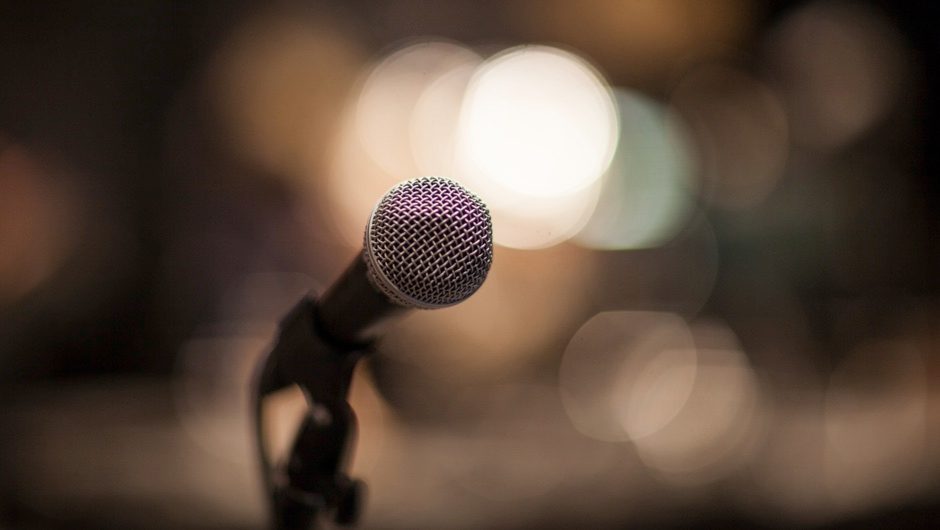
All focus was on the small silver microphone pointed accusingly at my face; every sound I made indiscriminately and ruthlessly amplified. My peers sat cross legged and impatient on the gymnasium floor, glaring up at me on the uncomfortably elevated stage. For someone who could barely speak up in class, this was terrifying. Reading off my speech from a shaky stack of cue cards, I still remember the confused and angry faces the few times I looked up into the audience. I finished to a disapproving silence, the sound of my own lack of confidence still reverberating loudly around the room. Needless to say I did not get the vote.

These memories resurfaced decades later, working my first real job after university: enthusiastic for my new corporate life at a large multinational technology company, I had joined a networking group.  We were planning a social event dinner and needed an MC to run the evening for the 30-50 guests.  As we basked in the tense silence that follows requests for volunteers, my old memories flashed back quickly before me, with all its amplified insecurities and resulting traumatic silence.  Experts believe that negative public speaking experiences in childhood can leave children with a lifelong fear of the podium.  I can see that.  Still, I found myself compelled to raise my hand; something inside made me do it.  Apparently it was time.

The event soon came, and something clicked. It seems some personal growth had occurred inadvertently in the decades following elementary school: years spent trying to be funny in class seems to have sharpened my reactive wit, and my post-pubescent voice, now too low to be heard in bars and restaurants, happened to work well on a microphone. The cheers and applause surprised me; I took an awkward bow, not knowing what else I was supposed to do. When the committee planned for future events I never had to raise my hand again. There was a job that was now mine by default.

Once my unmarried friends found out I had some event hosting experience, I inevitably became the de-facto wedding MC, and the events got larger and larger.  Venue coordinators ask if I was a professional after watching me work, though I presume they say that politely to everybody.  Friends have said that my interesting and engaging onstage presence is completely different than the me in real life, and they meant that as an honest compliment.  Strangers in the audience have approached me with awkward praise before scurrying off to the dessert table. The DJ at a large Indian wedding I hosted told me he’d never seen this particular audience actually pay attention like this.  It seems I can make a 300-strong crowd of Indian uncles and aunties listen to speeches and not immediately stampede the buffet, though I can barely hold focus telling stories at a small dinner party.

Through it all I still identify as an introvert, and looking back I found that it’s the naturally introverted traits which were actually the most useful when talking in front of an audience.  To speak publicly is to be deeply focused on a task without distraction; the overall experience is less like speaking to other people than it is like speaking to yourself; you just happen to be doing so in front of those other people.

As such, the relationship between a speaker and a large audience is unlike most other human relationships.  Something strange happens once a group size reaches a critical mass: the individuals in the audience stop being people altogether, and meld together into a new and separate entity.  You can feel its essence permeate the air, in the chatter and indistinct murmurs between the clinking of the tableware.  It is the feel of the room, the manifestation of its vibe, amorphous and ethereal; the psychic slurry of everybody’s individual feelings.  All the people are essentially gone, shadows behind the blinding spotlight; there is only the communal spirit of the audience, a wilderness creature that you have to make your friend.  And how do introverts make friends?  By listening and feeling things out, and by being calm and not trying to dominate; these tactics that work well on animals also apply for taming large groups of people, given that they’re much the same thing.

All of these potentially wonderful experiences lie locked behind the fear of speaking itself.  It takes some time to hear the sound of your own amplified voice without panic, let alone do the actual talking.  Starting is the hardest part: the lead up to the first word into the mic is nothing but stomach knots and escalating tension, like a climbing roller coaster that’s getting ready to drop.  Once the ride starts you acclimate quickly, but the lead-up has always been some kind of terrifying.  Even now, after all this practice, the fear in the moments before speaking have been a constant throughout life: from bombing elementary school speeches to emceeing large events to raising my hand in class or running meetings at work, speaking up has always been preceded by anxiety and a touch of dread.  With enough practice though, you figure it out.  Introversion and extroversion are like muscles: if you’re born favouring one side you can still find ways to strengthen the other.  Though the same fears have always been there, constant and reliable from the beginning, the weight of that anxiety has remained the same while carrying it around has gotten easier with exercise.

And now, here we are.  I’m an introvert that loves public speaking.  Interests include writing alone, thinking alone, sitting alone in a boat on a lake, and speaking alone in front of hundreds of people.  Even though failure is a distinct and painful outcome with its boos and awkward coughing, never forget that success can also be possible, and that it can be wonderful.   It’s a chance to touch many people’s lives all at once and feel their reaction in real time.  For introverts, success can be even more meaningful; there is something special about talking effectively to an audience for people who don’t talk often.  For the quiet ones in the back who all secretly have something worth showing and for the wallflowers that really just want to be seen, a lifetime of the deep and unshared can finally have an outlet: a room full of people, open to be influenced and who’s recognition is there to be earned. 

But for me, for every time I do a microphone check and step up behind the podium, for every time the roller coaster starts and the anxiety comes to a head, I’m telling my past self in grade school after his disastrous speech that everything will be okay, that he did the right thing, and that even though it may be hard now it all worked out in the end.  And whenever an evening ends with smiles, laughter and applause, that little boy is vindicated, each and every time.

New Normals

How the coronavirus is like that time I cut myself.  Because everything is the coronavirus.

Just before the pandemic, I cut my thumb.  While it’s ok to take some pride at the speed with which you can dice garlic, it’s also important to keep focus and look in the direction of the knife.  

My wife and I disagreed about the severity of the injury.  To me, a chunk of flesh and nail was now mostly separated from the rest of my body, hanging on if not by a thread then by an appropriately unsafe amount: the threat of a painful and violent separation was real.  I yelled in pain and shock and cursed my own stupidity as we rinsed the appendage under the sink; the surprising amount of blood made me queasy and light headed.  Lying on the floor with my thumb up in the air made it all feel better, like the dying cyborg Arnold at the end of Terminator 2, melting dramatically into a sea of hot pain.

My wife thought I was being a baby.  “This is just a scratch” she said, as she’d experienced much worse.  Doubtful.  She calmly applied a mysterious Chinese powder which we keep right next to the American band-aids, and wrapped my thumb in a few layers of gauze.  Lying in bed, convinced a hospital visit was unnecessary, the steady rhythm of dull pain throbbed me to sleep.

Every day thereafter the thumb was wrapped in layers of clean, fresh gauze, both to keep the wound safe from the world, and to keep the world safe from having to look at it.  Wearing layers of protection that had to stay clean meant that nothing could touch it, and that in turn meant I effectively did not have a left thumb.

Your thumb is a critical digit.  Without it, your index and middle fingers need to step up and work together in a forced and unholy partnership.  Buttoning up a dress shirt in the morning is like buttoning up your shirt using a pair of chopsticks.  Taking your phone out of your pocket is a test of strength and dexterity, while typing on your phone with the inner left side of your index finger puts that new dexterity to immediate use.  Holding things became precarious: a cup of water could just fall out of your hand at the slightest provocation.  Commuting to work, my compromised grip on the subway pole meant that the risk of falling over was real.  And finally, showering at the end of a long thumbless day, I washed my hair with my right hand while my left thumb, wrapped in both gauze and plastic, extended as far from the showerhead as possible: I had discovered a terrible dance move, and was holding it for all to see. The feelings of vulnerability and embarrassment do not easily wash off.

This mildly traumatic experience can be made to seem somewhat like the coronavirus pandemic, though it’s admittedly a huge stretch.  The knife hitting the thumb could be the virus arriving on North American shores.  The ensuing panic, trauma and confusion is like the bleeding that immediately followed, with everybody scrambling to find ways to manage, successfully or not.  And that awkward period without the use of a thumb is our current reality without the use of physical closeness, our mask-covered faces as the gauze-covered digit.  Anything could be the coronavirus these days.

What’s interesting about the comparison is what happens next.  Slowly, after a month or so, my thumb gradually healed.  The chunk of nail that had been cut through had grown out, and the thick layer of dead skin underneath came off with it, revealing the fresh, virgin thumb underneath.  My biggest fear was nerve damage, and as I now have a small dead spot in the corner of my thumb it sadly seems like this was the case. Very little time was spent dwelling on the loss however, both because it really wasn’t that bad but also for reasons that are a bit more revelatory.

The joy in getting back the use of my thumb overshadowed the fact that it’s not what it used to be.  I had long since adjusted to doing things the hard way: dressing slowly, texting poorly, dropping objects and falling down on the subway.  Being able to do things normally again felt like I had gained superpowers of speed and efficiency.  With my newly opposable thumb I have reclaimed my homo sapien status, standing proudly next to my human brothers and sisters.  So what if part of it is a little numb?  I can button shirts and hold cups again.  

Similarly, though the coronavirus pandemic may not end soon, it will also not last forever.  One day, when the virus has been effectively managed, the world will pick up the pieces and return to some semblance of normalcy.  Some parts of the life we once knew and loved will never come back, and we will miss them dearly and mourn their loss.  But it’s important not to discount the joy of all the good things that will survive and rush back into our lives all at once: Running into friends unexpectedly at a crowded bar or restaurant, shouting greetings over the noise and bustle, seeing their smiles on uncovered faces and hugging them hello without guilt or fear.  Children making new friends in a park, where the watchful eyes of nearby parents provide the only safety they need.  Boarding a crowded flight being only worried about the few hours of discomfort before arriving at your destination.  And returning to the office to see your coworkers face-to-face, riding a crowded subway while tightly gripping the handle.

On Getting Published

I’m using the logo because I think the contract says I can.  And if I’m wrong, then maybe I can use the resulting cease-and-desist letter.

To my regular readers, all dozen of you that I actually know in real life, I have some fun news.

Yesterday, a piece of writing that started from this blog was published in the Globe and Mail. You can find the story here, and in news stands on Monday.

To everybody coming in from the article: Hello! Welcome to my little space. Please feel free to look around, sorry about the mess. About and Contact are at the top on the right, bathroom is down the hall to your left. Make yourself at Home.

To be published somewhere nationally is both thrilling and terrifying, though most likely nothing will happen; the piece will be read with a shrug, and readers will click or flip elsewhere. It will likely be lost forever in the sea of competing information, carried away by a wave of actually professionally written articles. The only readers of this post will be the original dozen, wondering what all the fuss is about.

My biggest fear is that the way the piece has been articulated gets read in an unintentionally negative or unproductive way: though the article is billed as a personal essay, it is super topical, talks about race, and is somewhat political. All dangerous and flammable objects, and I’m a shy and flammable kind of guy. I don’t think anything I’ve written is out of bounds, but I’ve read the piece so many times in the editing process with the Globe that I’m too tunnel visioned to really tell anymore. I guess we’ll find out.

Whatever happens, I take comfort in the fact that the story is real and honest, written to the best of my ability within the allowable standards of the publication:  I didn’t get all the commas and semicolons I wanted, and some of the more fun and rhythmic lines are just plain old sentences now.  It’s all probably for the best anyways: who needs that kind of pretension outside of Toronto.  I’ve put the unedited director cut below mainly to satisfy my own completionist tendencies, though feel free to give it a skim.

Writing the piece itself was a fun and rewarding challenge, and that to me is the most important part. It’s good to remind myself that this is why I started this blog to begin with: the joy and frustration of putting the right words in the right order, the satisfaction when the sentences come together just right, and the reminder of how I thought and felt about things at certain points in my life. Everything else is just gravy, though getting published is kind of cool.


On Wearing Masks

The Director’s Cut

Even back before the coronavirus, wearing a mask in public was encouraged in East Asian culture.  As an Asian born and raised in Canada, it is telling that this practice felt very unnatural at first.

The same box of masks we use today was procured way back in January, well before all this started; my wife and I were lucky enough to get ahold of some and started wearing them daily on the subway.  She had emigrated from Wuhan years before it’s current notoriety, so wearing a mask to her was common sense and made her feel protected and safe.  I had recently emigrated from one part of Toronto to another, so wearing a mask in public was as foreign a concept as not apologizing for somebody else running into you.

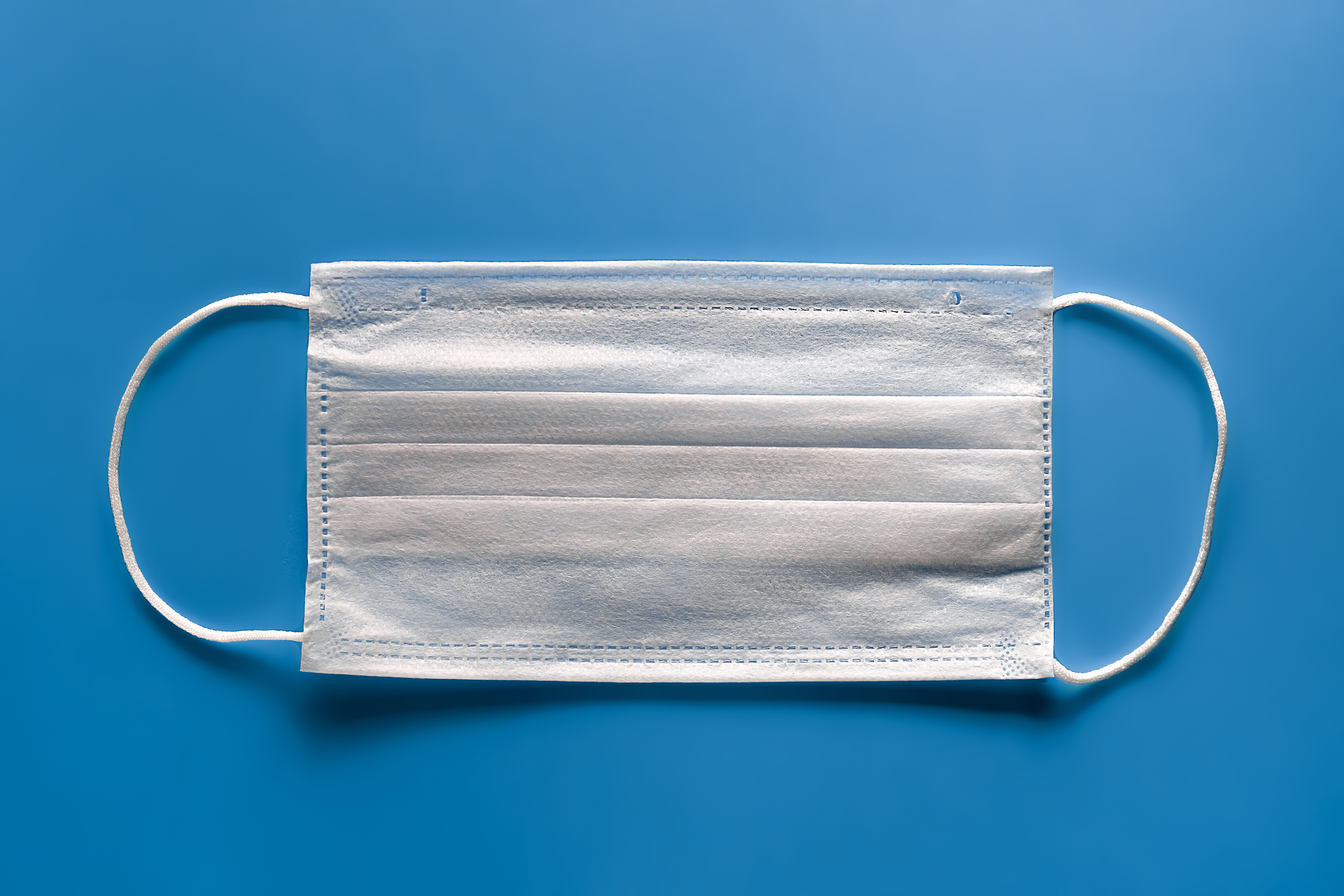
Masks are uncomfortable: the added protection is powered by your lungs, so breathing is no longer a subconscious activity; unlocking phones is marginally harder because FaceID can’t see through non-woven fabric; and after fogging up your glasses, masks get caught in the arms when you try to take them off, like a clingy symbiote.   And If you were a mask-wearing Asian back in January, there’s also the uncomfortable way people looked at you.

Stares and glances from non-mask wearers came with a mix of fear, disgust and resentment; a bitter and potent exclusionary cocktail.  Remember that this was back in January; before we stopped physically going to work, before the virus had spread outside China, and before North Americans began reconsidering the effectiveness of mask-wearing for the public.  It’s understandable how seeing me as an Asian wearing a mask could prompt a series of emotional responses; fear that I could be infected, disgust that I even had a mask given the official guidance at the time, and resentment for appearing to be part of a culture that was seen to be the source of the problem.  When I got that glare, I glared back with indignation.  I wonder what I was saying to them.

I remember, too, that mask-wearers also stared, and back then they were almost exclusively Asian.  Behind their brown eyes was an understanding, an urgency, and solidarity.  But also fear.  It was still a potent emotional cocktail, but at least it was an inclusive one and went down a little bit smoother.  They saw in me a fellow countryman, who knew and understood the seriousness of the situation while living in a country that didn’t.  But also that I might be infected, so it would be better off to stand a few feet away.

The deep irony is that this is the exact opposite experience of what it was like growing up as an Asian-Canadian.  The “real” Asians, the ones rooted in the cultures where mask-wearing was second nature, were finally accepting me as one of their own.  Meanwhile I felt rejected by the culture that I often felt more connected to, from the country that prided itself on welcoming immigration.  I have always been a visible minority; it took wearing a mask to finally make me feel like one.

On April 3, the CDC changed their guidelines on face masks.  Face coverings are to be worn in public settings, and while surgical masks are still not recommended for civilians it is admittedly due to supply constraints rather than their effectiveness.  On this topic, North American health care finally aligned with all the Asian countries that had previously experienced a similar pandemic, their citizens grinning smugly behind covered mouths.  As an Asian who grew up in North America, the resolution of this one point of cultural dissonance will serve as a substitute for the many others that may never come.  

I once envisioned a day when it would be just safe enough to ride the subway again in larger numbers.  Together, we would all wear masks in the same confined space; people of all cultures no longer divided by belief or by background, but united instead by the same fear of germs that our neighbours might be carrying.  Today I know it will take a lot more than a CDC guideline to realize this modest vision of unity.  

Masks have been politicized, for better or for worse. Mask-wearing protestors around the world have cemented the association between masks and protests, whether they are in Hong Kong fighting to keep freedom of speech in the wake of authoritarian policy changes, or in America fighting for racial equality in the wake of George Floyd’s murder.

In America, the world leader in coronavirus infection, some still refuse to wear masks. This may be rooted in a selfish read of American values, where freedom, independence and self-expression now come at the expense of the community’s safety. These same people might look down at mask wearers, Asian or otherwise, and see weakness, a sheepish compliance or a reluctance to stand out on their own. In truth, wearing a mask is a sign of solidarity; its strength comes from numbers, from the collective action, from the many willing to take a small sacrifice and inconvenience for the well-being of strangers in an unsung and unheroic fashion.

Wearing a mask is not just a proven tactic to fight the spread of disease, it’s also a symbol: it shows the world that you care, both about yourself and those around you. I wear masks now in the hopes that one day we won’t have to.

Coronavirus: The Great Unequalizer

The “V”-shape is for Vendetta

I was originally going to call this post “Why Stocks are Fine” before I realized I neither had the answer nor did I know if it was actually true.

When I cashed out my stock portfolio that fateful Monday in mid-March, a few things were clear: the virus was among us in North America, it was going to be very bad for people and businesses, and emergency measures would be required.  Trump’s history of incompetence and inability to execute was concerning, and we were already behind.  It seemed that day many other people were thinking the same thing, and we hammered the “Sell” button like we were playing Diablo.  The Exit sign was bright, and the doorway was wide enough to accommodate all of us, for a fee.  Stocks crashed.

In the following weeks, American congress passed a historic $2 trillion worth of stimulus, and the stock market wobbled upwards and hasn’t yet looked back.  5-6 million Americans lost their jobs every week, enough to repopulate Toronto twice over.  Stocks rallied.  Thousands of Americans died every day, while I quietly worked from home.  Stocks rallied.

I had forgotten that the stock market is not a reflection of the general economy, or the well-being of the people.  It is the stock market.  Averages are not equally weighted; your pain only matters as much as you do.  I bought back in a few weeks later and have been recouping my losses ever since.

The coronavirus is an accelerant of inequality, the thick and growing wall that separates the ‘haves’ from the ‘have-nots’.  That the virus does it’s work along the same border is the deep, cruel irony of this entire situation.  The less your livelihood depends on physically having to be somewhere, the more likely you are a knowledge worker that can keep working in near complete safety, in addition to already being relatively well-off financially.  Everybody else in industries that rely on physicality are facing health risks if they are lucky enough to still be working, or unemployment if they are not.  

There are few worse things than a non-expert opinion, so here’s mine: the aggregate economic impact of the millions of lost jobs in relatively lower paying industries doesn’t compare to all the better-paid knowledge workers that are still doing fine, let alone the rich who still have all their wealth: socially isolated, watching Netflix in concrete bunkers, next to stacks of N-95 masks and empty take out boxes.  

As an assessment of economic impact, this is mostly wrong and ignores the many things that I am not capable of discussing.  Oil is now basically free, and I don’t understand what that might mean to the world supply chain; I just know there is now a storage problem and my shed can barely fit my lawnmower so even here I’m of no use.  This is just to say the headlines on the record unemployment don’t tell the full story until you know what those jobs were and what their economic contribution was.  The ‘Have-Nots’ are now hurting from disease in addition to not-having.  The ‘Haves’ are still fine, with equity and employment; anxious but healthy, and working from home. 

The coronavirus is also an accelerant of digital adoption.  The world’s largest tech companies double as America’s largest companies, and own the handful of top slots on the S&P 500.  They are already extremely advantaged, with largely unregulated ownership of the world’s data, as well as the scale to make use of it effectively.  That tech companies see a smaller impact relative to non-tech companies is already a distinct advantage; they are large and successful, insulated with towering piles of cash, and they have a workforce of knowledge workers that can easily self isolate and still be productive.  The fact that they also see a potentially permanent increase in the use of their digital products with everybody at home is really just unfair.  You have not only the naturally fastest runner, but one that also got a really good night’s sleep while everybody else just tripped on their shoelaces.  

Big tech will emerge fine, or better.  Others will not be so lucky.  The at-risk companies also serve or employ the same at-risk people, the people that faced a choice between employment or physical well being and had the choice made for them.  The companies may get financial assistance, hopefully doled out equitably to those that need it.  The individuals may get a busy signal or a 404 error.

The coronavirus seems to enjoy benefiting those that are already ahead.  Inequality creates divergent worlds, and the virus has exacerbated the difference between them.  It is an added disadvantage to the already disadvantaged, letting the winners win by an even greater margin.  It is maddening that the virus happens to follow the same rules established by income inequality, but it is also difficult to think of a scenario that would disproportionately impact only the rich. 

The Containment Show

Not quite cabin fever, maybe just the dry cough

From my bay windows, I can see just as far as the ends of my street.  If the whole world stopped existing just past this view I would be none the wiser.  Beyond the stop sign flows the hot lava.

It has been 5 weeks of self isolation and working from home; excluding the odd supply run, I basically have not left the house.  I get fresh air when I remember to open the window; it’s sweeter than I remember. My face presses comically against the screen.

The Truman Show is a 1998 movie about a man who grows up in an enclosed and constructed reality as the unwitting star of a reality TV show, and it was filmed with a budget of $60 million dollars. If they were to make a real show like this in current-day pandemic times it could probably be done for a fraction of the cost of the actual movie. Maybe they already have.

Perhaps a strong sedative was slipped in our food one night, and my wife and I were transported to a replica of our house on a modest Hollywood soundstage. Instead of the internet, we would be unwittingly connected to a team of actors, media experts, and AI, who would replace the content of our digital information and social interactions with scripted content from the team of writers (and the other AI). On next week’s episode, Google and group chats will tell me the pandemic has escalated. It’s zombies now. All connections to the outside world are through computers of varying size; if they tell me there are zombies just beyond the view of my bay window I have no reason to doubt them. I order a slightly stronger lock from Amazon and I stop taking out the garbage. 28 Days Later is queued up after Contagion.

It is exceedingly unlikely that this scenario is true, but it’s still within the realm of the possible; a fraction of $60 million dollars is still a good amount of money that somebody could have a lot of fun with. Not going outside in over a month means all information about the world outside the walls of my house is received digitally. This is obvious, but also strange to be actually living through. It’s the feeling of being confined, but only physically; the mind is still free to explore all the virtual spaces it had before.

In truth, this is really not too different from the world before coronavirus: We’re all still socializing the same information from the same sources with the same groups of people.  Coworkers and friends with similar backgrounds and mindsets, drawing from the same pool of cultural ideas and echoing its variations to each other. We may be trapped now in containment, but how free were we to begin with?  

There is a memory I have as a child, of a specific ride in Centreville on Centre Island. You drive a tiny car around a small track, with a single rail that runs down the middle of the track and under your vehicle. You have full control over the accelerator and steering (which for a child is pretty cool), except a set of bumpers under your car prevent you from deviating too far from the track. That day in my tiny car I learned about the mechanics of driving, and the illusion of freedom. This memory resurfaced many years later, driving a slightly less tiny Honda Civic to and from a job I was ambivalent about and a stifling home life. I was stuck on a track going around in circles.

We all live our lives in boxes of varying size and opacity, that grow and shrink as we move through life.  Over time my box got bigger than the few blocks between home and work. When we got the mortgage for this house I glimpsed one end of my new box, in the distance in the fog, in what was once an endless green field.  This is not a bad thing. We all have to do work, life is finite, and boundaries help us focus and force us to make choices.  

Today the box of our lives is arguably the smallest it’s ever been. Circumstances have forced us to discard many of the things we love to fit into this smaller box, but also forced us to choose what to keep in it with us: relationships, internet, Netflix. When things get better and our boxes get a little bigger, I hope we will be thoughtful about what we choose to fill the newfound space with.

On Wearing Masks

It’s complicated.

Even back when things were normal, wearing a mask in public was encouraged in East Asian culture.  As an Asian born and raised in Canada, it is telling that this practice to me feels very unnatural.

Way back in January, my wife and I were lucky (and inconsiderate) enough to get ahold of some masks, and started wearing them on our daily commute on the subway.  My wife had emigrated from Wuhan years before it’s current notoriety, so wearing a mask to her was common sense and made her feel protected and safe. I had recently emigrated from one part of Toronto to another, so wearing a mask in public was as foreign a concept as not apologizing for somebody else running into you.

Masks are uncomfortable.  The added protection is powered by your lungs, so breathing is no longer a frictionless activity.  Unlocking phones is marginally harder because FaceID can’t see through non-woven fabric. After fogging up my glasses, masks get caught in the arms when I try to take them off, like a clingy symbiote.  And then there’s the way people look at you.  

Physical discomforts are nagging but tangible; social and emotional discomforts are a little more subversive.  Looks from strangers range in duration from a glance to a stare, and come in two varieties that are awkward in equal and opposite directions.

The first is from the non-mask wearer, a mix consisting of fear, disgust and resentment; a bitter and potent exclusionary cocktail.  Remember that this was back in January; before we stopped physically going to work, before the virus had spread outside China, and before North Americans began reconsidering the effectiveness of mask-wearing for the general public.  It’s understandable how seeing me as an Asian wearing a mask could prompt a series of emotional responses; fear that I could be infected, disgust that I even had a mask, let alone the disregard for the official guidance, and resentment for appearing to be part of a culture that was perceived to be the source of the problem.  When I got that glare, I glared back with indignation. I wonder what I was saying to them.

The second kind is from the mask wearer, and all mask wearers at the time were exclusively Asian.  Behind their brown and oft-bespectacled eyes was an understanding, an urgency, and solidarity. But also fear.  Still a potent cocktail, but at least it was inclusive and it went down a little bit smoother than the other one.  They saw in me a fellow countryman, who But also that I might be infected, so it would be better off to stand a few feet away.

The deep irony is that this is the exact opposite experience of what it was like growing up in Canada; an inverted microcosm of the Asian American experience.  The “real” Asians, the ones rooted in the cultures where mask-wearing was second nature, were accepting me as one of their own. Meanwhile I felt rejection by the culture that I actually felt more connected to, from the country that prided itself on welcoming immigration.  I have always been a visible minority – it took wearing a mask to finally make me feel like one.

On April 3, the CDC changed their guidelines on face masks.  Cloth face coverings should now be worn in public settings, and while surgical masks are still not recommended for civilians it is admittedly due to supply constraints rather than their effectiveness.  On this topic, North American health care is finally aligned with all the Asian countries that had previously experienced a similar pandemic; their citizens grinning smugly behind covered mouths. As an Asian who grew up in North America, the resolution of this one point of cultural dissonance will serve as a substitute for the many others that may never come.

I look forward to the day when this is almost over, when we feel just safe enough to ride the subway again in larger numbers.  Together, we will all wear masks in the same confined space; people of all cultures no longer divided by belief or by background, but united instead by the same fear of the germs that our neighbours might be carrying.

Enter Coronavirus (03/21/2020)

In retrospect this was a really good time to start blogging again

In January, we were planning to have my in-laws visit us. They are both from Wuhan. This did not happen.

My wife was seeing the effects of the virus on Chinese social media, and was getting worried about the virus making its way here and whether our Western governments would be able to handle it. When things got bad in China, Xi Jinping clapped his hands, sent a few messages on WeChat, and ten days later a new hospital appeared in Wuhan. If Canada were in the same situation its response would be comparatively drowsy. I told her not to worry. The virus wouldn’t make it’s way here, and even if it did I was sure it wouldn’t be that bad. She told me I had no idea. I bought the overpriced Purell on Amazon to make her feel better, not because I thought we needed it.

Today is Saturday March 21.  Flipping her hair back with freshly sanitized hands, her eyes shine sassily behind a yellow surgical mask.  She’s always right, and she knows it.

I believe in every social pool there is a finite amount of anxiety, and as the gravity of a situation is understood by more people the anxiety spreads across evenly and everybody shares the collective mental burden.  One week ago, it didn’t feel like the Western world really understood or was taking the appropriate actions, so the anxiety was mine and mine alone. By mid week, the stock market had crashed, our workplace was managing an overloaded VPN from the newly instituted work-from-home policy, and various emergency relief packages and travel bans were announced.  Many pennies had dropped this week, as well as public sentiment, my net worth, and ironically many of my worries. Everybody out there was freaking out just enough and roughly in the right direction for me to start to feel a little bit better. The situation is still extremely bad, North America is still not ready, but at least now most people know about this curve that needs flattening.  Next week presumably is when we really start to find out how unprepared we really are.

In 2008, 2 days after Lehman Brothers imploded I liquidated my stock portfolio at what seemed at the time like a large loss. This past Monday, Mar 16, which would soon be known as the worst one day drop since “Black Monday” in 1987, I did the same thing. Eating a loss now is easier if you expect things to get much worse later, albeit this time around it’s centred on life and death instead of a stack of bad mortgages. Waking up in the morning and checking the Stocks app hoping the markets have crashed is somewhat analogous to waking up in the morning and checking the News app hoping that more people have died. It’s like I’m actually betting against humanity, hoping for the best yet putting real money against the worst. This is an awkward and meta-guilt-ridden place to have put myself in. Our small box of yellow surgical masks is asking to be donated to the nearest hospital, but I close the cupboard door to block out it’s soft, pleading voice. It’s also getting harder to fall asleep at night, but I might just be sore from sitting too long in the same chair.

Transitioning to social distancing was such a non-event it really made me really wonder about my old lifestyle choices. The only difference between weekdays and weekends is which laptop I turn on in the morning. I eat lunch at the same handful of restaurants as I did before, except now a third party brings the food to me and I throw the delivery bag out very quickly. Dishes still need to be done, and podcasts still need to be listened to. I think not having children is a huge reason why this is so easy for us right now; I can only imagine the parents who are both working from home and taking care of their kids at the same time, and how they must be managing. The poop must be everywhere, on the walls and filling your shoes.

Getting together with friends had already gotten increasingly difficult. As everybody got married and started having kids the group size grew very large very quickly, making gatherings harder to organize. This virus was just another exponential growth curve that forced us to stay home. Even though I don’t see people anymore, I’m actually more engaged more regularly with my social circle than ever before; as the virus started lighting up in Toronto, so did all my WhatsApp group chats (and that one straggling Google Hangout). Friends were sharing news and gossip, expressing concern and actively checking in on one another. One guy in Richmond Hill said he was running out of garlic, and friends from across the GTA immediately offered assistance, despite the inefficiencies of delivering a clove of garlic from Whitby to Richmond Hill. The thought counted for something and the sentiment was real.

I had my first group video chat with some friends recently, on a night where meeting up would have been unlikely even in normal circumstances.  We talked and laughed at each other’s increasingly unkempt hair. My friend was holding his new baby, and as I saw him for the first time peeking out from their corner of my monitor it occurred to me that if it wasn’t for the coronavirus I would likely not have seen them until much later on.  

We are going to see how social behaviors change in a world that is simultaneously self-quarantined and digitally-enabled; social technologies are going to get used in joyful and unexpected ways: meeting for after-work drinks on enterprise video conferencing software instead of at the bar, and Yoga classes being taught on Zoom.

The new behaviours we develop in response to forced isolation may stick with us after this is all over, and maybe even supplement going out to meet up with people when that becomes too burdensome. There is a space for this in our culture and we have the tools; maybe this is the time where we also develop the habits. It’s also entirely possible that nothing changes once this is over, and we abandon both the grievances and learnings of the quarantine lifestyle. Until we find out I will hold onto hope, alongside other essentials like friends and family and a strong internet connection.